

China Hits “Hard-Won” 5% GDP Growth Target for 2025
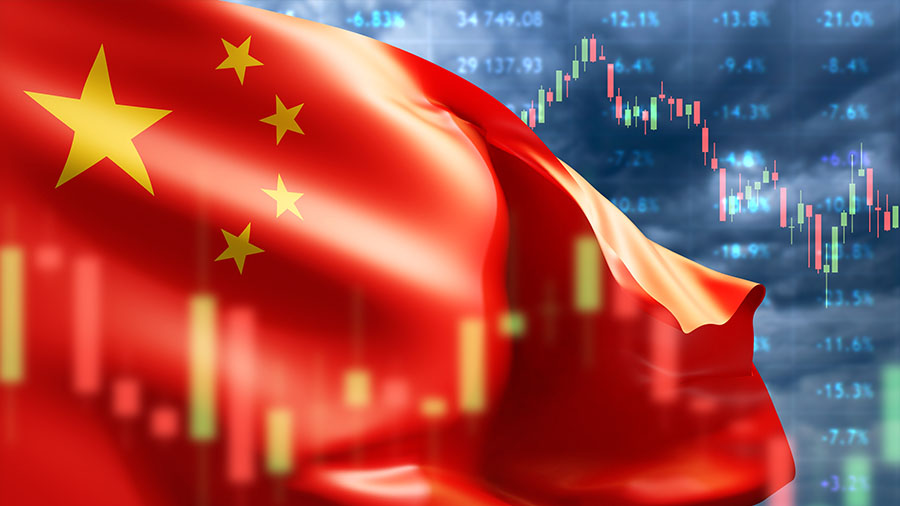
The National Bureau of Statistics (NBS) of China officially announced on Monday that the world’s second-largest economy expanded by 5.0% in 2025, precisely meeting the government’s annual growth objective. While the headline figure suggests stability, the underlying data reveals a “two-speed” economy: a surging export sector and high-tech manufacturing base offset by a deeply troubled property market and tepid domestic consumption. As China enters 2026, the question remains whether this “hard-won” growth can be sustained in the face of escalating US tariffs and a domestic structural shift.
The Numbers Behind the Milestone
In absolute terms, China’s GDP surpassed the 140 trillion yuan ($20.13 trillion) threshold for the first time in history. The 5.0% expansion in 2025 represents a net growth of approximately 5.38 trillion yuan—an amount larger than the entire annual GDP of Belgium.
However, the momentum notably cooled toward the end of the year. Data for the fourth quarter of 2025 showed growth slowing to 4.5% year-on-year, down from 4.8% in the third quarter. This deceleration underscores the exhaustion of the post-pandemic recovery and the mounting pressure from external trade barriers imposed during the return of the Trump administration in the United States.
A Record-Breaking Trade Buffer
The primary engine of growth in 2025 was not the Chinese consumer, but the global buyer. China’s trade surplus reached a staggering record of $1.19 trillion in 2025—the first time it has ever exceeded the $1 trillion mark in a single year. Despite aggressive new tariffs from Washington, Chinese exporters successfully rerouted goods through Southeast Asia and increased shipments to the Global South and the European Union.
“Exports were the lifejacket for the Chinese economy last year,” said Zhang Wei, a senior economist at a Beijing-based think tank. “But relying on a trillion-dollar surplus is a dangerous game. It invites more protectionism from trading partners who see their own industries being hollowed out by Chinese overcapacity.”
The Real Estate Drag
The most significant “anchor” on the economy remains the property sector. Property-related investment plunged 17.2% in 2025, extending a brutal three-year correction. Once the driver of nearly 25% of China’s economic activity, the real estate market is now a central challenge for policymakers in Zhongnanhai.
Despite numerous government interventions to lower mortgage rates and support “white-listed” developers, consumer confidence in housing remains at an all-time low. Household spending mirrored this caution, with retail sales rising only 3.7% over the year—a figure that indicates many families are opting for “precautionary savings” rather than spending their disposable income.
Employment and Social Shifts
The human cost of the economic transition is reflected in the labor market. The surveyed unemployment rate edged up to 5.2% by December 2025, with youth unemployment (ages 16-24) remaining a particular point of concern at nearly 19%. This has led to a growing “lying flat” (tang ping) sentiment among young graduates who find the job market increasingly competitive and the rewards diminishing.
Interestingly, rural income growth (6%) outpaced urban income growth (4.3%) in 2025. This suggests that the government’s “Common Prosperity” drive and rural revitalization efforts are having some impact, even as the urban middle class feels the pinch from falling property values and stagnant wages.
The 2026 Outlook: A “Proactive” Stance
Looking ahead to 2026, Beijing has signaled it will maintain a “proactive fiscal policy and a prudent monetary policy.” Analysts expect the growth target for 2026 to be set at “around 4.5% to 5.0%” during the upcoming National People’s Congress in March. However, achieving this will require more than just export strength.
The “major wildcard,” as many economists note, is the geopolitical landscape. If the U.S. follows through on threats of 60% universal tariffs on Chinese goods, the export engine could stall. To counter this, China is doubling down on “New Quality Productive Forces”—high-tech sectors like green energy, artificial intelligence, and advanced semiconductors.
“China is effectively trying to swap its old growth model based on bricks and mortar for a new one based on chips and cells,” says Dr. Ken Wong of the Hong Kong Institute of Economic Research. “It is a high-stakes transition. If domestic consumption doesn’t pick up the slack, the overcapacity in these new sectors will only lead to more trade friction globally.”
Conclusion
China has hit its 5% mark, but the celebration in Beijing is muted. The 140-trillion-yuan milestone is a testament to the country’s industrial scale, but the cracks in the foundation—the property crisis and weak consumer demand—are widening. As 2026 begins, the world’s second-largest economy finds itself at a crossroads: adapt to a world of higher trade barriers or face a period of prolonged stagnation similar to Japan’s “Lost Decades.” For now, the dragon is still breathing fire, but it is breathing harder than before.