Medical Guide to Modern Hair Restoration Techniques
Hair loss, medically referred to as alopecia, is a complex biological condition that affects millions of individuals worldwide. While genetics, hormonal fluctuations, and environmental factors all play a role in the thinning of hair, the psychological impact on patients is universally profound. Although pharmacological treatments and topical solutions can slow the progression of follicular miniaturization, the most definitive and long-lasting medical intervention remains surgical restoration. In recent years, remarkable advancements in microsurgical technology have transformed hair transplantation into a highly sophisticated, minimally invasive discipline that yields virtually undetectable, natural-looking results.
The Biological Principles of Hair Restoration
To fully grasp how surgical hair restoration operates, one must first understand the underlying pathophysiology of androgenetic alopecia, the most common form of hair loss. In susceptible individuals, hair follicles located in the frontal and vertex regions of the scalp possess a genetic sensitivity to Dihydrotestosterone (DHT), a potent androgenic hormone. When DHT binds to the receptors of these follicles, it shortens their growth phase (anagen) and forces them into a prolonged resting phase (telogen). Over successive cycles, the hair shafts become progressively thinner and shorter until the follicle eventually ceases production entirely.
However, the medical foundation of surgical hair restoration relies on a phenomenon known as “donor dominance.” Follicles located at the occipital and parietal regions (the back and sides of the head) are biologically resistant to the miniaturizing effects of DHT. When a specialized medical team extracts these resilient follicles and meticulously relocates them to balding areas, the grafts retain their genetic immunity to DHT. Consequently, the newly relocated follicles will continue to cycle and produce healthy hair for the remainder of the patient’s life.
Advanced Surgical Modalities
Modern hair restoration has largely moved away from older, invasive strip-harvesting techniques in favor of precise, individual follicle extraction. Today, the two most prominent medical methodologies are Follicular Unit Extraction (FUE) and Direct Hair Implantation (DHI).
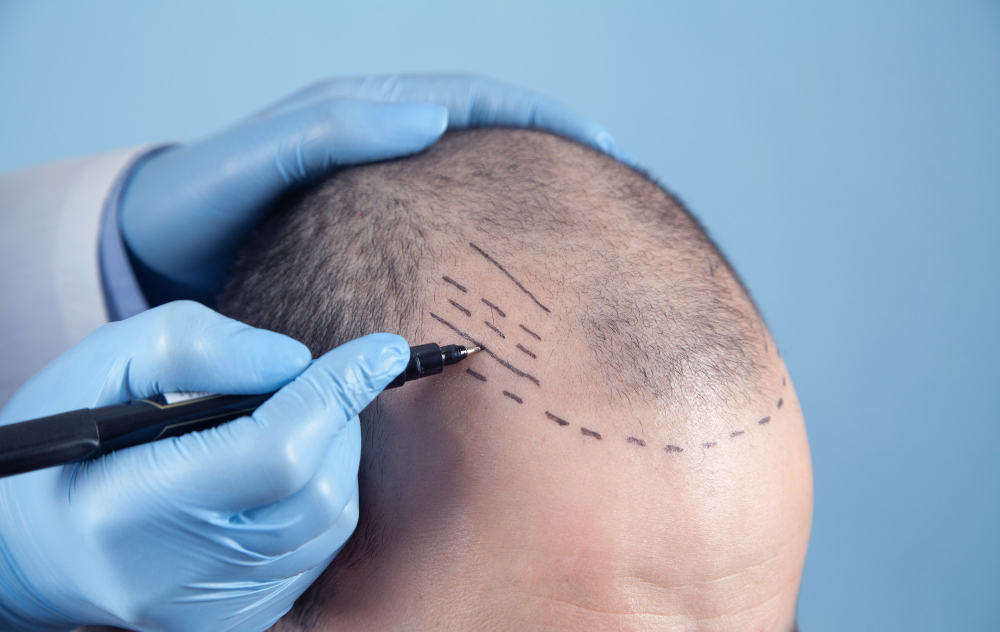
Follicular Unit Extraction (FUE) FUE is considered the gold standard in modern clinical hair restoration. During this procedure, a surgeon utilizes a specialized micro-punch tool—typically ranging from 0.6mm to 0.9mm in diameter—to individually extract follicular units from the donor zone. These microscopic incisions heal rapidly, leaving virtually invisible dot-like scars. Once the grafts are harvested and preserved in a nutrient-rich solution, the surgeon creates micro-channels in the recipient area using sapphire or steel blades. The grafts are then carefully implanted into these channels at specific angles and densities to mimic natural hair growth.
Direct Hair Implantation (DHI) DHI is an advanced modification of the traditional FUE method. While the extraction process remains identical, the implantation phase differs significantly. Instead of creating pre-made channels, the medical team loads the extracted hair follicles into a specialized instrument known as a Choi Implanter Pen. This pen simultaneously pierces the scalp and deposits the follicle in a single, fluid motion. This technique offers surgeons unparalleled control over the depth, angle, and direction of each individual hair. For any patient undergoing a Hair transplant, the DHI method is often recommended for smaller areas requiring high density or precise hairline detailing, while FUE remains highly efficient for patients requiring massive graft counts over larger balding zones.
The Post-Operative Recovery Timeline
The success of a follicular transfer is heavily dependent on meticulous post-operative care and adherence to clinical guidelines. The recovery timeline follows a predictable biological sequence:
- Days 1 to 7 (Immediate Healing): The scalp will exhibit mild swelling, redness, and the formation of tiny scabs around the recipient sites. Patients are instructed to sleep at an elevated angle and follow strict medical washing protocols to prevent infection and protect the fragile, newly implanted grafts.
- Weeks 2 to 8 (Telogen Effluvium): It is medically normal for patients to experience “shock loss” during this phase. The surgical trauma causes the newly implanted hair shafts to shed. However, the vital follicular bulge and dermal papilla remain safely anchored beneath the scalp, entering a temporary resting phase.
- Months 3 to 6 (The Anagen Phase): New cellular generation begins, and fine, downy hairs emerge from the transplanted follicles. The growth rate may be uneven initially, but the strands will gradually increase in both length and caliber.
- Months 10 to 18 (Maturation): The final aesthetic outcome becomes visible. The transplanted hair achieves its full thickness, density, and natural texture, seamlessly integrating with the surrounding native hair.
The Importance of Clinical Excellence
Executing a successful follicular transfer requires a deep understanding of facial anatomy, an artistic approach to hairline design, and rigorous adherence to medical sterilization protocols. Attempting to undergo these delicate microsurgeries at uncertified or inexperienced clinics can result in severe complications, including graft transection, donor area depletion, or unnatural, “pluggy” aesthetics. Selecting a reputable, medically certified institution such as Gold City ensures that the procedure is performed by qualified professionals using state-of-the-art surgical technology. A premium clinical environment prioritizes patient safety, minimizes tissue trauma, and maximizes the survival rate of every precious hair graft.
The psychological and emotional benefits of addressing severe alopecia are thoroughly documented within the medical community. By utilizing the patient’s own naturally resilient hair follicles, modern surgical techniques offer a scientifically proven, permanent remedy. Through precise surgical execution and careful patient compliance during the recovery phase, individuals can successfully restore their hair density, rejuvenating their appearance and significantly improving their overall quality of life.