
EU and Mercosur Sign Historic Trade Pact to Create World’s Largest Free-Trade Zone
In a monumental shift for global commerce, leaders from the European Union and the Mercosur bloc (Brazil, Argentina, Paraguay, and Uruguay) gathered in the Paraguayan capital of Asunción on Saturday, January 17, to formally sign a sweeping free-trade agreement. The deal, which has been under negotiation for a staggering 26 years, establishes an integrated marketplace of over 700 million consumers and accounts for approximately 20% of the global GDP. Coming at a time of escalating trade tensions between the U.S. and China, the pact is being hailed as a “geopolitical masterstroke” that asserts the two regions as champions of rules-based trade in an increasingly protectionist world.
The Economic Engine: Slashing Barriers
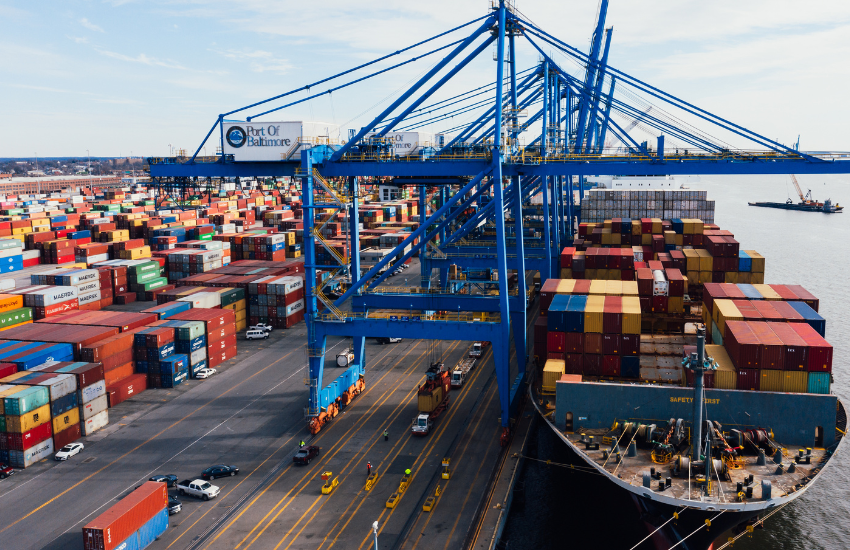
The core of the agreement is the systematic dismantling of trade barriers that have historically stifled economic exchange between Europe and South America. Under the terms of the deal, the EU will eliminate duties on 92% of Mercosur exports, while the South American bloc will remove tariffs on over 91% of European goods.
For European industries, the wins are substantial. High tariffs on key exports—such as 35% on cars, up to 18% on chemicals, and 14% on pharmaceuticals—will be gradually phased out. The European Commission estimates that EU businesses will save over €4 billion ($4.35 billion) in annual duties. Furthermore, the pact grants European companies unprecedented access to public procurement contracts in Mercosur countries, allowing them to bid on government projects on an equal footing with local firms.
On the South American side, the agreement provides a massive boost to the agricultural sector. Producers of beef, poultry, sugar, and ethanol will gain significantly expanded access to the European market. While the EU has maintained strict quotas to protect its own farmers—limiting Mercosur beef imports to 99,000 tonnes annually—the overall reduction in barriers is expected to drive a 5% increase in total trade between the two blocs within the next decade.
Geopolitical Signaling in the “Trump Era”
The timing of the signing is no coincidence. As the second Trump administration in Washington moves toward aggressive universal tariffs and a potential withdrawal from multilateral trade frameworks, the EU and Mercosur have chosen to move in the opposite direction.
“Today, we choose cooperation over polarization,” European Commission President Ursula von der Leyen said during the signing ceremony. “At a time when global trade is being used as a weapon, we are building a bridge. This agreement is our answer to protectionism. It proves that like-minded continents can still come together to create prosperity based on shared rules.”
The deal also serves as a strategic counterweight to China’s growing influence in South America. Beijing has recently surpassed the EU as the top trading partner for several Mercosur nations. By cementing this partnership, Brussels aims to secure a reliable supply of critical raw materials—such as lithium and green hydrogen—essential for Europe’s digital and green transitions.
![Image Placeholder: A wide-angle shot of the signing ceremony inside the Central Bank of Paraguay. Leaders including Ursula von der Leyen, Brazil’s Lula da Silva, and Argentina’s Javier Milei are seen standing together behind a long mahogany table, holding leather-bound documents. In the background, the flags of the EU and the four Mercosur nations are displayed prominently. An inset graphic shows a map highlighting the two blocs and the phrase “700 Million Consumers.”]
The Environmental Guardrails
One of the primary reasons for the 26-year delay was European concern over environmental standards, particularly deforestation in the Amazon. To secure the deal, the final text includes a “Trade and Sustainable Development” chapter that makes adherence to the 2015 Paris Climate Agreement an “essential element.”
For the first time in a major trade deal, there are enforceable commitments to combat deforestation and protect labor rights. If a signatory is found to be in systemic violation of these environmental standards, the other party has the right to suspend trade preferences. This “green clause” was vital in swaying skeptical member states like Italy and the Netherlands, although France notably remained the sole major holdout, abstaining from the final vote in a nod to its powerful domestic farming lobby.
Domestic Challenges and the Road to Ratification
Despite the fanfare in Asunción, the path to full implementation remains fraught with obstacles. The agreement must now be ratified by the European Parliament and the national legislatures of all involved countries.
In Europe, the “farmer protests” that rocked Brussels and Paris in 2024 and 2025 remain a vivid memory. Agricultural unions have already vowed to fight the ratification, arguing that “cheap South American beef” produced under different regulatory standards will undercut European livelihoods. “This is a dark day for European agriculture,” a spokesperson for the COPA-COGECA farming union stated. “We are being sacrificed on the altar of car exports.”
Conversely, in South America, some industrial sectors in Brazil and Argentina fear that an influx of high-tech European machinery and vehicles will stifle local manufacturing. However, leaders like Brazil’s President Luiz Inácio Lula da Silva and Argentina’s Javier Milei—despite their ideological differences—have both championed the deal as a necessary “shock therapy” to modernize their economies.
A New Chapter for Global Trade
As the ink dries on the treaty, the global trade landscape has been fundamentally altered. The EU-Mercosur pact is more than just a list of tariff reductions; it is a statement of intent. It suggests that the future of global trade may lie in “mega-regional” blocs that combine economic interests with normative standards on climate and labor.
If ratified, the deal is projected to add €77.6 billion to the EU’s GDP by 2040 and support over 400,000 jobs across the continent. For Mercosur, it offers a path out of economic isolation and a chance to integrate into Western value chains. The 25-year wait may have been long, but for the leaders gathered in Paraguay, the result is a legacy-defining achievement that will shape the 21st-century economy.