


Gold and Silver Shatter Records Amidst Transatlantic Trade Fears

Global financial markets were gripped by a wave of risk aversion on Tuesday, colloquially dubbed “Red Tuesday” by traders, as the specter of a renewed trade war between the United States and the European Union sent shockwaves through equity floors from Tokyo to Wall Street. While stock indices suffered their sharpest single-day decline since late 2024, precious metals staged a historic rally, with both gold and silver piercing through psychological resistance levels to reach all-time highs.
The Catalyst: A Geopolitical Standoff
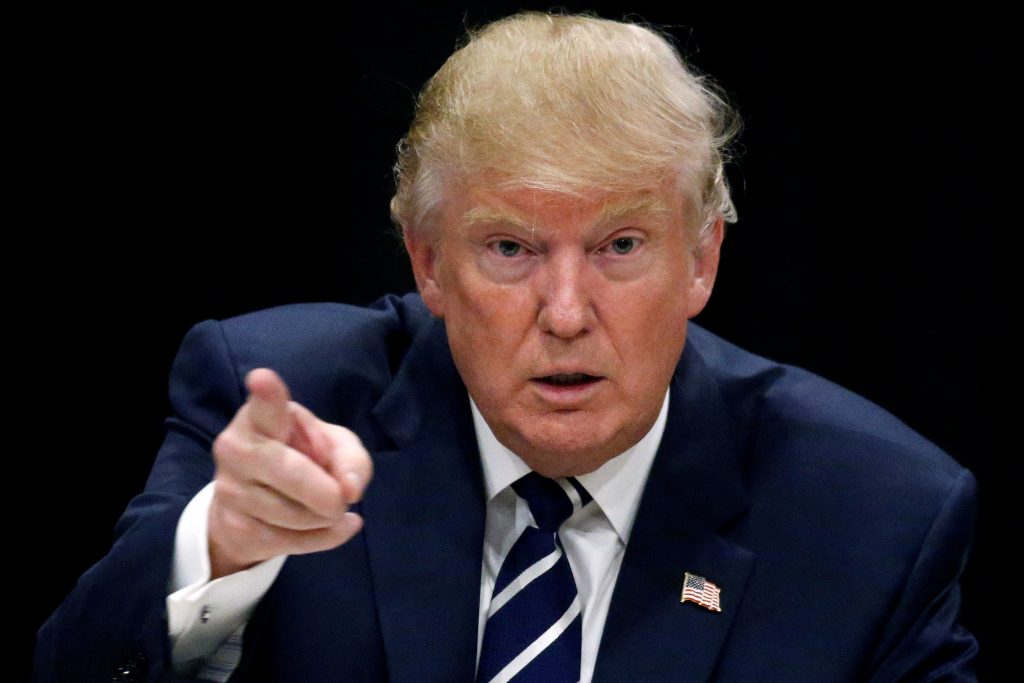
The precipitous sell-off was triggered by President Donald Trump’s ultimatum regarding tariffs on European goods, stemming from the escalating diplomatic row over Greenland. The threat of a 25% levy on European automotive and pharmaceutical sectors—vital arteries of the Eurozone economy—forced institutional investors to rapidly reprice risk.
“The market hates uncertainty, but it hates a trade war between allies even more,” explained Elena Ricci, Chief Investment Officer at Morgan Stanley Europe. “We spent the last two years calibrating supply chains for a US-China decoupling. No one’s models were stressed for a US-EU decoupling. The algorithm reaction was immediate and brutal.”
Equities in Freefall
In New York, the opening bell brought immediate selling pressure. The Dow Jones Industrial Average plummeted 850 points (roughly 2.1%) by midday, led by heavy losses in the industrial and manufacturing sectors. The S&P 500 erased its January gains, dropping 1.8%, while the tech-heavy Nasdaq Composite shed 2.3%.
The technology sector, usually resilient, was not spared. Fears that the trade dispute could extend to rare earth mineral access—central to the Greenland narrative—hammered chipmakers and EV manufacturers. Tesla dropped 4%, while NVIDIA saw a 3.5% correction as investors locked in profits from the previous year’s AI boom.
Across the Atlantic, the damage was even more visceral. Germany’s DAX index, heavily weighted with automakers like Volkswagen, BMW, and Mercedes-Benz, tumbled 3.4%. These companies are directly in the crosshairs of the proposed US tariffs. The French CAC 40 followed suit, losing 2.9% as luxury goods giants feared retaliatory duties.
The Golden Age of Safe Havens
As equities bled, capital fled frantically into safe-haven assets. Gold, the traditional hedge against geopolitical chaos and inflation, staged a spectacular breakout. Spot gold prices surged $85 an ounce to trade at a record $3,150.50. This shattered the previous ceiling of $3,000 established in late 2025.
“This isn’t just speculation; this is panic buying mixed with central bank accumulation,” noted Marcus Chen, senior commodities analyst at Kitco Metals. “Central banks, particularly in the Global South, have been buying gold to diversify away from the dollar. Now, retail and institutional investors are joining the stampede because they see the Western alliance fracturing.”
Silver, often called “gold’s high-beta cousin,” outperformed even the yellow metal in percentage terms. Driven by both its status as a store of value and its critical role in solar panels and electronics (sectors sensitive to supply chain shocks), silver jumped 6% to reach $42.80 an ounce, a level not seen in over a decade.
![Image Placeholder: A dual-layered financial graphic. The background is a blurred image of the New York Stock Exchange floor, showing traders with hands on their heads in distress. Overlaid in the foreground is a sharp, bright green line graph rocketing upwards, labeled “GOLD (XAU/USD) – ATH”, contrasting with a red line plummeting downwards labeled “DAX 30”.]
Currency Wars and Bond Yields
The currency markets mirrored the equity turmoil. The Euro (EUR) weakened significantly against the US Dollar, dropping below the $1.05 mark, as traders anticipated the European Central Bank (ECB) might be forced to cut rates aggressively to cushion the blow of potential tariffs.
However, the US Dollar Index (DXY) was choppy. While normally a beneficiary of safety flows, the dollar itself is at the center of the political storm. Concerns about US debt sustainability, exacerbated by the prospect of reduced trade revenue and retaliatory tariffs, kept the greenback’s gains in check.
US Treasury yields compressed, with the benchmark 10-year note yield falling to 3.8% as investors parked cash in government debt. The inversion of the yield curve deepened, flashing a renewed recession signal that many economists had hoped was a thing of the past.
Crypto: The Wild Card
Interestingly, the cryptocurrency market decoupled from equities for the first time in months. Bitcoin, often critiqued for behaving like a tech stock, rallied 4% to reclaim the $110,000 level. Proponents argued that the geopolitical spat validated the thesis of “stateless money.”
“When the US and EU fight, the fiat system looks shaky,” tweeted prominent crypto-analyst @SatoshiLegacy. “Bitcoin doesn’t care about tariffs on German cars. Tick tock, next block.”
Sector Impact: Logistics and Retail
The logistics sector took a heavy beating. Giants like Maersk and FedEx saw their shares slide as the prospect of reduced transatlantic trade volume loomed. Retailers, already grappling with thin margins, warned that tariffs would inevitably be passed on to consumers.
“If these tariffs go into effect next month as threatened, the price of everything from Italian shoes to German kitchen appliances will jump 25% overnight,” warned the National Retail Federation in a press release. “This is an inflation bomb waiting to explode.”
Outlook: All Eyes on the Fed and ECB
Market participants are now looking to the central banks for a lifeline. The Federal Reserve is scheduled to meet next week, and the probability of a rate cut has skyrocketed in the futures market. However, the Fed faces a nightmare scenario: tariffs are inflationary (raising prices), but they also slow growth (recession risk). This “stagflationary” impulse makes the central bank’s job nearly impossible.
“Jerome Powell is in a box,” said Mohamed El-Erian, giving an interview on Bloomberg TV. “He cannot cut rates if tariffs spike inflation, but he cannot hold rates high if the economy is crashing due to a trade war. The policy path has just become incredibly narrow.”
As the closing bells rang around the world, the mood was somber. Trillions of dollars in paper wealth were erased in a single session. With the deadline for the “Greenland Ultimatum” ticking down, traders are bracing for continued volatility. The era of low-volatility steady growth appears to have ended abruptly on January 20, 2026.