


Trade War Looms as Trump Threatens “Massive Tariffs” Over Greenland Dispute; EU Scrambles for Response
The fragile stability of the global economic order faced its sternest test of the year this Tuesday, as United States President Donald Trump escalated his rhetorical and diplomatic offensive regarding the purchase of Greenland. What began as a resurfaced campaign promise has rapidly metastasized into a full-blown geopolitical standoff, with the American leader threatening “massive, unprecedented tariffs” on European Union member states should Denmark continue to refuse negotiations over the autonomous territory.
The Ultimatum
Speaking from the Rose Garden early Tuesday morning, President Trump doubled down on his administration’s interest in acquiring Greenland, citing “strategic national security interests” and “vast untapped mineral resources” critical to the U.S. technology sector. Dismissing the Danish government’s repeated assertions that Greenland is not for sale, Trump characterized the refusal as an “insult to the United States” and a failure of the NATO alliance burden-sharing.
“We protect them, we protect Europe, and they can’t even sit down and talk about a real estate deal that would benefit everyone,” Trump told reporters. “If Denmark, and by extension the European Union, wants to play games, we have tools. We have tariffs. And we will use them. I am looking at 25% on German cars, French wine, and Danish pharmaceuticals starting next month if we don’t see movement.”
European Reaction: Shock and Solidarity
The response across the Atlantic was swift and sharp. In Copenhagen, officials reiterated that the idea was “absurd.” Danish Prime Minister Mette Frederiksen, who has previously clashed with Trump on this issue during his first term, issued a terse statement: “Greenland is not Danish. Greenland belongs to Greenland. It is not a commodity to be traded. We are close allies with the U.S., but threats of economic coercion among friends are unacceptable.”
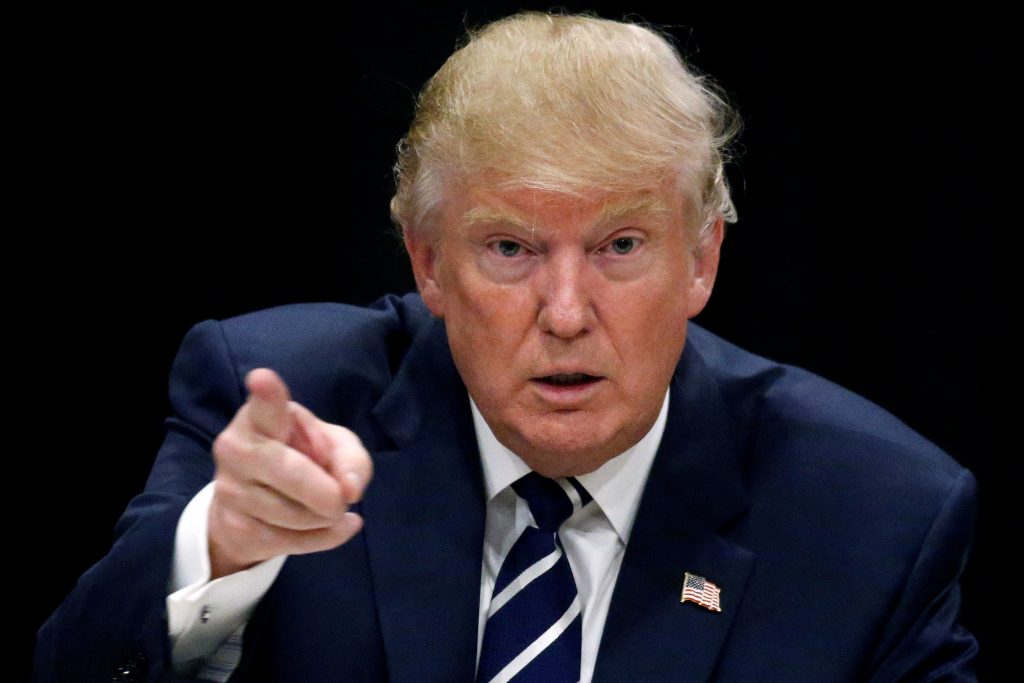
![Image Placeholder: A split-screen editorial image. On the left, Donald Trump is gesturing forcefully at a podium with the US Presidential seal. On the right, a view of the colorful houses of Nuuk, Greenland, covered in snow. In the center, a jagged red line graph overlaid showing a sharp drop in market indices.]
In Brussels, the mood was one of crisis management. The European Commission announced an emergency summit to discuss potential countermeasures. “The European Union stands in complete solidarity with Denmark,” said the Commission President. “We will not negotiate under threat. A trade war benefits no one, but the EU is prepared to defend its interests with proportionate and swift retaliatory measures if the U.S. proceeds with illegal tariffs.”
Market Jitters
Financial markets reacted negatively to the escalating rhetoric. Major indices in Asia, Europe, and the U.S. all saw declines on Tuesday. The Dow Jones Industrial Average dropped 450 points in early trading, while the DAX in Germany shed nearly 2%. Conversely, safe-haven assets surged; gold prices hit a new all-time record, surpassing previous resistance levels as investors fled riskier equities.
Economic analysts warn that a new trade war in 2026 could push the teetering global economy into a recession. “The supply chains have just barely stabilized from the disruptions of the early 2020s,” noted Sarah Jenkins, Chief Global Strategist at Barclay’s. “If the U.S. imposes a blanket 25% tariff on key European sectors, we are looking at a retaliatory cycle that will spike inflation and halt growth. The automotive and pharmaceutical sectors would be hit hardest.”
Strategic Importance of Greenland
Behind the theatre of real estate deals lies a serious strategic calculation. Greenland is home to some of the world’s largest undeveloped deposits of rare earth metals—neodymium, praseodymium, and dysprosium—materials essential for the production of electric vehicles, wind turbines, and military guidance systems. Currently, China dominates the global supply chain for these minerals. The Trump administration views securing Greenland as a way to break Beijing’s stranglehold on critical resources.
Furthermore, the Arctic region is becoming increasingly militarized as ice caps melt, opening new shipping lanes. The U.S. already operates Thule Air Base (Pituffik Space Base) in northern Greenland, a critical link in its ballistic missile early warning system. Full control over the island would cement American dominance in the Arctic circle, checking both Russian and Chinese ambitions in the High North.
Domestic Fallout
In Washington, reaction was split along partisan lines, though some Republicans expressed unease at the threat of tariffs against NATO allies. “We need those minerals, yes,” said Senator Lindsey Graham. “But blowing up the NATO alliance over it might be a bridge too high. We need a deal, not a war.”
Democrats seized on the chaos, with Senate Majority Leader Chuck Schumer calling the move “erratic and dangerous.” Schumer warned that alienating Europe would only drive them closer to economic partnerships with China—a trend already visible in the recent thaw between Ottawa and Beijing regarding EV tariffs.
What Comes Next?
Diplomats are frantically working back channels to de-escalate the situation before the “next month” deadline imposed by Trump. There are rumors of a compromise involving a long-term lease or joint resource exploration treaty rather than an outright purchase, but it remains to be seen if such a middle ground can satisfy the President’s demand for a “win.”
For now, the world watches Nuuk and Washington. What started as a diplomatic oddity has evolved into the central risk factor for the global economy in 2026. As the snow falls in Greenland, the heat is rising in boardrooms and situation rooms across the globe.